Stainless Steel vs. Plastic Cat Fountains: Which Is Better for Everyday Use?
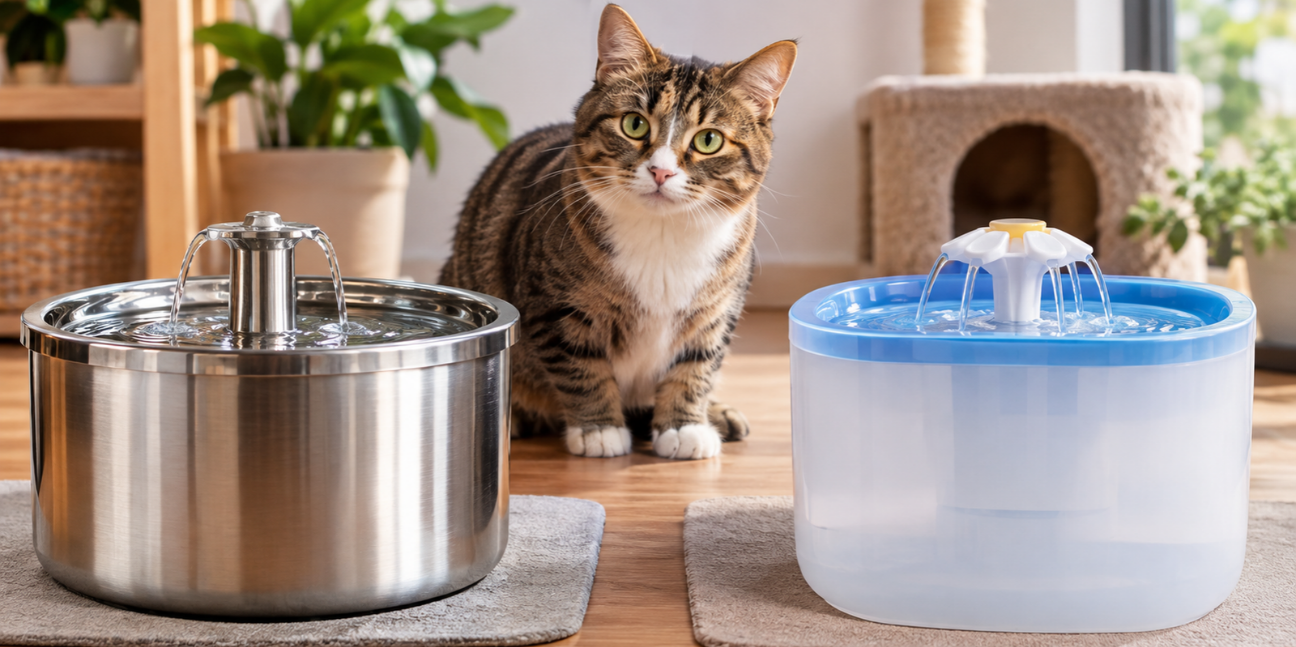
Keeping cats hydrated is an essential part of responsible pet care. While fresh water should always be available, some cats show greater interest in moving water than in a traditional water bowl. Cat water fountains offer a practical way to make drinking water more accessible while supporting a consistent hydration routine.
However, choosing the right fountain involves more than appearance or price. Material, ease of cleaning, durability, filtration, and placement can all influence the everyday experience for both cats and their owners. Stainless steel and plastic are two common materials, and each has advantages worth considering.
Understanding these differences can help cat owners choose a fountain that suits their household. Options such as the KittySpout 2.2L Fountain, Metal Bundles, and Wireless Fountain offer different approaches to everyday feline hydration.
Why Does a Cat Water Fountain Material Matter?
A water fountain is used repeatedly throughout the day, making its construction an important consideration. The material affects how the fountain feels to the touch, how easily its surfaces can be cleaned, and how well it holds up under regular use.
Plastic fountains are often lightweight and affordable, making them accessible for first-time buyers. Stainless steel models, on the other hand, appeal to owners looking for a durable surface that is generally straightforward to maintain.
Neither material automatically guarantees cleaner water. Regular washing, proper filter maintenance, and fresh water remain essential regardless of the fountain's construction. The best choice depends on the product's design, the cat's preferences, and the owner's cleaning routine.
Stainless Steel Cat Fountains: Key Benefits
Easier Everyday Cleaning
Stainless steel has a smooth, nonporous surface that is generally easy to clean. When washed correctly, it can help owners maintain a hygienic drinking area without dealing with surface scratches that may develop on some plastic products.
This characteristic makes stainless steel appealing for households that prioritize routine maintenance. Food particles, dust, and saliva can accumulate around drinking areas, so a fountain should be cleaned according to its manufacturer's instructions.
A well-designed stainless steel fountain with removable components can make this process more manageable. Owners should still check the pump, filter compartment, and other parts because these areas may collect residue even when the main basin looks clean.
Durability for Long-Term Use
Stainless steel is known for its strength and resistance to everyday wear. Compared with some plastic surfaces, quality stainless steel is less likely to develop visible scratches during normal use.
Its durability can make it a worthwhile consideration for owners who want a fountain that remains functional over time. However, overall lifespan also depends on the pump, electrical components, construction quality, and maintenance practices.
A Modern, Minimal Appearance
Stainless steel fountains often complement contemporary kitchens and other home interiors. Their understated finish can blend into a space without looking like an oversized pet accessory.
For households where a fountain remains visible throughout the day, this practical design consideration can be just as important as capacity and cleaning requirements.
Plastic Cat Fountains: Advantages and Limitations
Lightweight and Often Budget-Friendly
Plastic fountains can be easy to move between rooms, making them useful for owners who frequently change their cat's drinking area. They are also commonly available at different price points, which can make them attractive to budget-conscious households.
Some plastic models offer straightforward designs and useful features without requiring a larger initial investment. For owners trying a fountain for the first time, this accessibility may be appealing.
Scratches and Maintenance Considerations
One potential drawback of plastic is that some surfaces can develop scratches through regular use or improper cleaning. Scratched areas may be more difficult to clean thoroughly, depending on their depth and condition.
This does not mean every plastic fountain is unhygienic. Its cleanliness depends on construction, use, and maintenance. Nevertheless, owners should inspect plastic components regularly and replace damaged parts when recommended.
Material Sensitivity
Some cats may react to particular materials, although individual sensitivities vary. Cats experiencing chin irritation or other skin problems should be evaluated by a veterinarian rather than having the issue automatically attributed to their water fountain.
For owners concerned about material choice, a stainless steel drinking surface may be worth considering. Regardless of material, keeping the fountain clean and ensuring the cat has access to fresh water are priorities.
Stainless Steel vs. Plastic Cat Fountains: A Practical Comparison
The following comparison highlights general differences rather than guaranteeing the performance of every model.
| Feature | Stainless Steel | Plastic |
| Cleaning | Smooth surfaces are generally easy to clean | Depends on surface condition and design |
| Scratch resistance | Generally more resistant to everyday scratching | Some plastics scratch more easily |
| Weight | Often heavier than plastic | Usually lightweight |
| Appearance | Modern, metallic finish | Available in many colors and styles |
| Cost | May have a higher initial price | Often available at lower price points |
| Longevity | Depends on material quality and components | Depends on plastic quality and construction |
The material alone should not determine the final purchase. Pump reliability, replacement filter availability, ease of disassembly, and the manufacturer's cleaning guidance are equally important.
What to Consider When Choosing a KittySpout Fountain
KittySpout 2.2L Fountain for Everyday Hydration
The KittySpout 2.2L Fountain is an option worth exploring for households looking for a defined water capacity. Capacity can influence how often the reservoir needs refilling, particularly in homes where more than one cat uses the same drinking station.
Actual refill frequency depends on the number of cats, their drinking habits, evaporation, and the fountain's design. Owners should continue checking water levels daily instead of assuming a particular capacity will last for a set period.
KittySpout Metal Bundles for a Coordinated Setup
The KittySpout Metal Bundles offer another option for owners interested in metal-based fountain products. Bundled configurations may be worth considering when comparing included components, accessories, or overall value.
Before purchasing, it is sensible to verify exactly what each bundle includes, whether replacement filters are available, and which parts require regular replacement. These details help establish the long-term cost of maintaining the fountain.
KittySpout Wireless Fountain for Flexible Placement
The KittySpout Wireless Fountain is worth considering for households that want more flexibility when choosing a drinking location. A wireless design may be useful where power outlets are inconvenient or where owners prefer fewer visible cords around a pet's drinking area.
Wireless models still require attention to charging, battery care, cleaning, and the manufacturer's operating instructions. Owners should confirm the specific power and maintenance requirements before making a decision.
How to Keep Any Cat Water Fountain Clean
Regardless of material, a consistent cleaning routine helps maintain a suitable drinking environment.
- Replace the water regularly: Refill with fresh water and check the level throughout the day.
- Wash the fountain: Follow the manufacturer's recommended cleaning schedule and use appropriate cleaning products.
- Clean the pump: Residue can accumulate in small components, so follow the instructions for safe disassembly and cleaning.
- Maintain the filter: Replace filters at the recommended intervals rather than waiting for visible discoloration.
- Inspect the components: Check for cracks, worn parts, unusual pump noise, or other signs that maintenance or replacement may be needed.
These habits support better fountain maintenance and help owners identify problems before they interfere with normal operation.
Which Cat Water Fountain Is the Better Choice?
Stainless steel can be an excellent choice for owners who value durability, easy surface cleaning, and a modern appearance. Plastic may suit households seeking a lightweight and potentially more affordable alternative. In either case, product design and consistent maintenance matter as much as the material itself.
KittySpout offers several options to consider, including the 2.2L Fountain, Metal Bundles, and Wireless Fountain. Comparing their individual features, dimensions, included accessories, and care requirements can help identify the most suitable choice for a particular household.
Ultimately, the best cat water fountain is one that fits the home, remains easy to maintain, and encourages consistent access to fresh drinking water. By prioritizing practical features over appearance alone, cat owners can make a more informed decision about their pets' everyday hydration needs.
